MUIS-Certified vs Muslim-Owned: The Difference
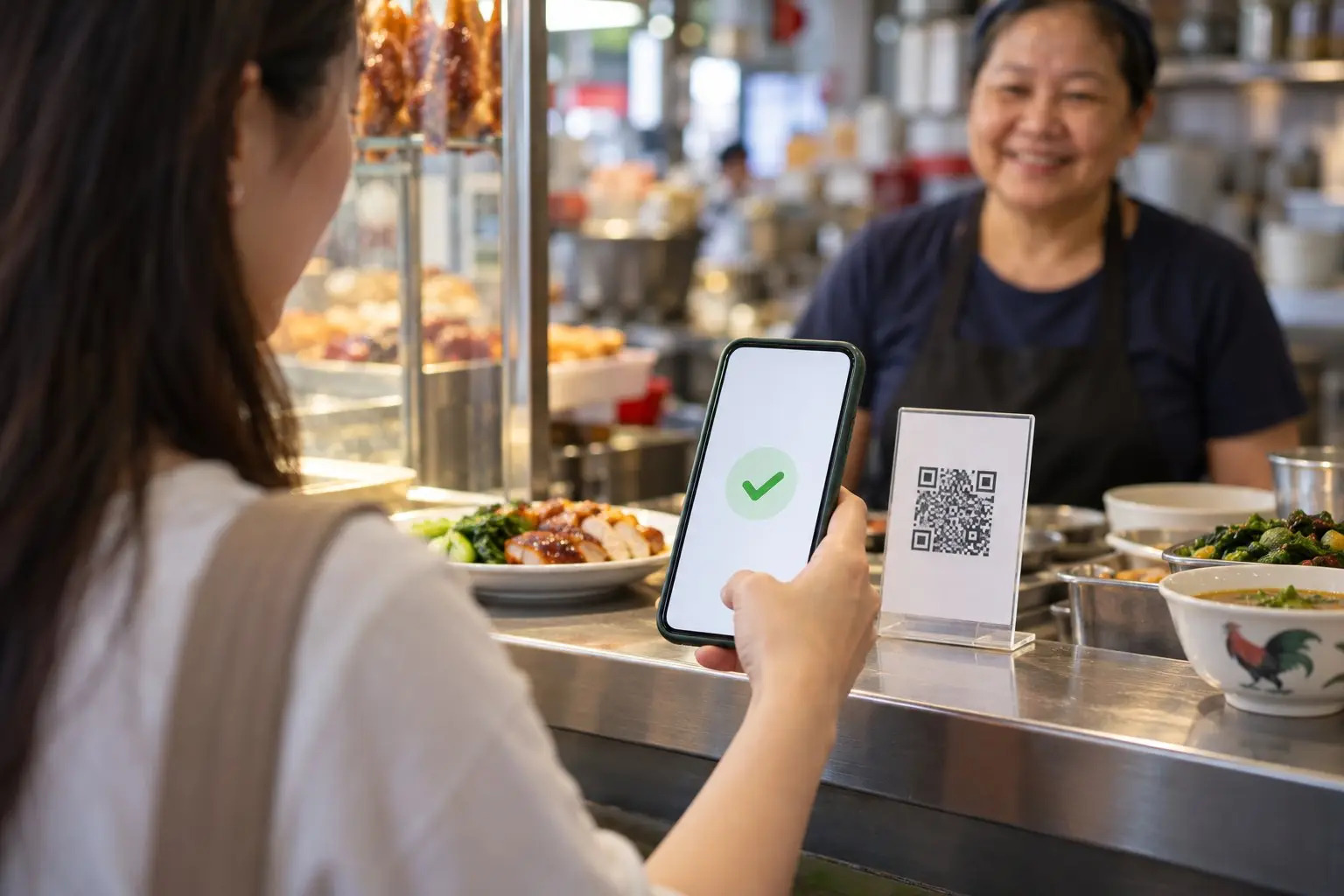
A MUIS-certified eatery holds a valid halal certificate issued by MUIS after it checks the eatery's ingredients, processes, facilities and supplier documentation. A Muslim-owned eatery is simply owned by a Muslim and may hold no certificate. Only MUIS certification makes a place 'halal certified' in Singapore. For certainty, check the official MUIS list.
“Is it halal?” and “Is it Muslim-owned?” are two different questions, and food blogs often blur them. In Singapore the distinction is clear-cut, and knowing it saves you from guessing.
This page is practical guidance on how certification works and how to verify it. It is not a religious ruling — questions of personal practice are between you and a qualified religious resource.
The two terms, defined
| MUIS-certified | Muslim-owned | |
|---|---|---|
| What it means | Holds a valid halal certificate from MUIS | The business owner is Muslim |
| Who decides it | MUIS, after an audit | A description of the owner, not a certification |
| What was checked | Premises, processes, ingredients, supplier documentation | Nothing is checked by this label alone |
| Can you verify it? | Yes — on the official MUIS list | Not through any official halal register |
| Is it “halal certified”? | Yes | Not by itself |
Why “Muslim-owned” is not enough on its own
A Muslim owner may run an excellent, carefully sourced kitchen — but without a MUIS certificate there is no MUIS check of its processes, ingredients, supplier documentation and cross-contamination controls. The “halal certified” status in Singapore specifically refers to that MUIS audit and certificate. So a Muslim-owned stall that has not applied for, or does not hold, a MUIS certificate is not “halal certified” in the official sense, even if its food may suit your needs.
That is a factual distinction about certification, not a judgement about any business.
Don’t rely on the logo alone
A halal logo on a signboard or menu can be:
- Expired — certificates must be renewed and can lapse.
- Withdrawn — status can be removed if standards are not kept.
- Unofficial — a generic “halal” sign is not proof of a current MUIS certificate.
How to verify in under a minute
- Go to the official MUIS list of certified establishments at halal.muis.gov.sg.
- Search by the outlet or company name.
- Confirm the specific outlet is listed — an outlet’s inclusion on the list indicates it is currently certified. Certification is tied to a named premises, not a whole chain by default.
- Note the scheme and certificate number shown on the result.
Our site’s halal tools help you search the same official source.
The takeaway
In Singapore, only MUIS certification makes a place “halal certified”. Treat “Muslim-owned” as separate information, and when you need certainty, verify on the official MUIS register. For what the certificate itself covers, see what MUIS halal certification actually means.
Sources
- Halal-certified establishments (official search) — Majlis Ugama Islam Singapura (MUIS) (as of October 2026)
- Halal — guide to halal and halal certification in Singapore — Majlis Ugama Islam Singapura (MUIS) (as of October 2026)